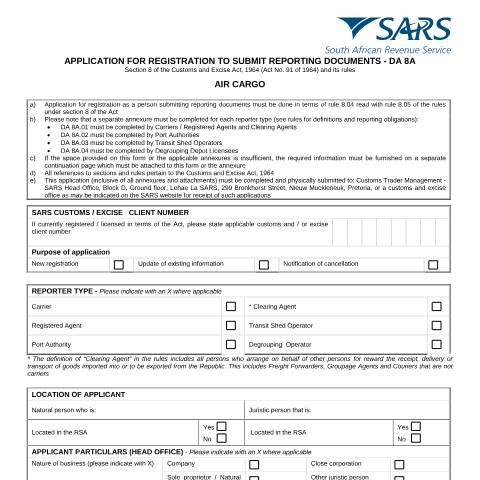
The DA 8A Document: A Critical Step for Air Cargo Reporting in South Africa
The DA 8A form is an essential document for entities involved in the air cargo industry within South Africa. Specifically, it is a registration application for those who intend to submit reporting documents concerning air cargo. This form is particularly relevant in light of the Customs and Excise Act, 1964 (Act No. 91 of 1964), which lays out the framework for customs procedures and the regulation of goods imported to or exported from the country.
In this article, we will explore the nuances of the DA 8A form, delving into its role within the broader customs framework, the procedures for completion, and the responsibilities of those who submit this application.
Navigating the Application Timeline: Key Dates to Remember
Understanding the timeline for submitting the DA 8A is crucial for compliance and operational efficiency. The application process does not occur in isolation; it interlinks with various customs procedures and reporting requirements.
When to Apply
Entities planning to engage in air cargo operations must complete the DA 8A prior to their first shipment. This timeline ensures that all necessary registrations are in place and that the applicant is compliant with customs regulations.
Post-Submission Timeline
Once the DA 8A is submitted, the South African Revenue Service (SARS) will process the application. Depending on the completeness and accuracy of the information provided, applicants can expect a response typically within a period defined by SARS. Failure to receive a confirmation may necessitate follow-up communications to ensure that there are no issues with the application.
In addition, keep in mind that ongoing compliance with customs regulations is a continuous process. Entities must inform SARS of any changes in their operational specifics or contact details as they arise.
The DA 8A is not merely a bureaucratic necessity; it plays a foundational role in the customs framework. It helps to facilitate and regulate the air cargo industry while ensuring that appropriate safety and security measures are in place.
How the DA 8A Connects to Other Regulatory Requirements
Upon successful registration using the DA 8A, applicants will also be required to adhere to specific rules regarding the submission of reporting documents as stipulated in the Customs and Excise Act. The submission of these documents is crucial for the smooth transit of air cargo, and compliance with these regulations is monitored closely by SARS.
Additionally, it is important to note that the DA 8A must be accompanied by various annexures depending on the type of reporter (e.g., Carrier, Clearing Agent, Port Authority, etc.). Each category has specific reporting obligations, and failure to comply can lead to penalties or delays in cargo processing.
Understanding the Profiles of Applicants: Who Needs to File a DA 8A?
Navigating the requirements of the DA 8A form necessitates an understanding of the different types of entities that may need to apply.
Types of Entities Required to Register
1. **Carriers:** These include airlines and logistics companies responsible for transporting goods.
2. **Clearing Agents:** These individuals or companies facilitate the customs clearance process on behalf of clients.
3. **Registered Agents:** These are authorized representatives of carriers or clearing agents.
4. **Port Authorities:** Governing bodies that oversee the operations of air cargo handling at ports.
5. **Transit Shed Operators:** Those managing cargo transfer facilities.
6. **Degrouping Depot Licensees:** Licensed operators responsible for sorting and distributing goods.
Unique Cases and Exceptions
It is important to highlight that entities outside South Africa but engaged in air cargo operations must also comply with the DA 8A requirements, ensuring that they appoint a registered agent within the country to facilitate communication and compliance with local regulations.
Filling out the DA 8A form requires careful attention to detail. Even minor errors could delay your application and subsequent customs processes.
- **Applicant Details:** Provide accurate information regarding the business structure, whether it is a company, close corporation, or individual.
- **South African Bank Account Details:** If applicable, a South African bank account number should be listed. If the applicant does not have one, this must be indicated.
- **Authorized Officer Section:** This section requires signatures and identification of the individuals authorized to act on behalf of the applicant. It is crucial that this is completed accurately to avoid delays.
Attachments Required for Submission
When submitting the DA 8A, applicants must include several supporting documents:
- **Business Registration Certificate:** Issued by the Companies and Intellectual Property Commission (CIPC).
- **Resolution or Letter of Consent:** A document proving that the applicant has the authority to submit the DA 8A.
- **Identity Documents:** These must be provided for all directors if registering as a company or close corporation.
Post-Submission Procedures: What Happens Next?
After submission, it is advisable to maintain communication with SARS regarding the status of your application. The processing time can vary, but staying informed is critical to ensure compliance with reporting requirements.
Compliance and Monitoring
Once registered, your obligations to comply with customs regulations continue. It is imperative to keep SARS updated on any changes in your business operations or contact details. Regular audits and checks by SARS may occur to ensure compliance with customs laws.
Consequences of Non-Compliance
Entities that fail to comply with the necessary regulations may face significant penalties, including fines or suspension from operating within the air cargo sector. Therefore, maintaining accurate records and timely submissions is essential.
Conclusion: The Importance of the DA 8A
The DA 8A form is not just a procedural formality; it represents a critical step in ensuring lawful and efficient air cargo operations within South Africa. By understanding its importance and adhering to the requirements, applicants can facilitate smoother customs processes, thereby contributing to the overall efficacy of the air cargo industry in the country.
Navigating the complexities of customs regulations can be daunting, but by ensuring proper registration and compliance through the DA 8A, entities will position themselves for success in the dynamic air cargo landscape.
Understanding the DA 8A Application Process
The DA 8A form is crucial for businesses involved in the air cargo industry in South Africa, specifically for those looking to submit reporting documents to the South African Revenue Service (SARS). The application process involves several key steps that must be meticulously followed to ensure compliance with the Customs and Excise Act.
To initiate the DA 8A application, businesses must first ensure they meet the eligibility criteria set forth by SARS. This typically includes being a registered entity with a valid registration number and a proven history of compliance with relevant customs regulations. It is advisable to have all necessary supporting documents prepared in advance, such as company registration certificates, tax clearance certificates, and any pertinent licenses that relate to air cargo operations.
Once the eligibility is confirmed, applicants can download the DA 8A form from the SARS website. The form itself is structured to capture detailed information about the applicant's business operations, including the nature of the cargo, the types of reporting documents the business intends to submit, and any other relevant operational details.
After completing the form, businesses must submit it to the designated SARS office. Submission can often be done electronically through the SARS eFiling portal, which is a secure and efficient way to handle such applications. However, should a business prefer or require a manual submission, they must ensure that they follow the specific submission guidelines provided by SARS, which may differ based on the region.
Following submission, it is essential to track the status of the application. SARS typically communicates directly with applicants regarding the outcome. In many instances, additional information may be requested, and it is vital to respond promptly to such requests to avoid delays. Understanding the timelines for processing can help businesses plan accordingly, as approvals can vary based on SARS workload and the complexity of the application.
Key Documentation Required with DA 8A Application
The DA 8A application is not a standalone process; it requires comprehensive documentation to support the application. Preparing the necessary documents beforehand can significantly expedite the application process. Below is a detailed breakdown of the primary documents that should accompany the DA 8A form:
1. **Business Registration Documents**: A copy of the company registration certificate, which authenticates that the business is legally recognized under South African law. This document serves as proof of the entity's legal standing and is essential for identification purposes.
2. **Tax Clearance Certificate**: A current tax clearance certificate from the South African Revenue Service is crucial, demonstrating that the business is compliant with tax obligations. This certificate must be valid at the time of application, as SARS checks for compliance before processing the DA 8A form.
3. **Air Cargo Licensing**: If applicable, copies of any specialized licenses related to air cargo must be included. This may include licenses issued for dangerous goods handling or other specific air freight regulations.
4. **Operational Procedures**: Any internal operating procedures or policies that detail how the business handles air cargo can also enhance the application. These documents help SARS understand the business's logistics approach and compliance with safety regulations.
5. **Proof of Address**: Businesses may need to submit a recent utility bill or similar document that confirms the physical address of the operation. This is important for administrative purposes and to ensure correspondence reaches the appropriate location.
Compiling these documents in a clear and organized manner can assist in the review process, reducing the likelihood of delays or additional queries from SARS. Furthermore, keeping copies of all submitted documentation is recommended for record-keeping and future reference.
Common Challenges and How to Overcome Them in the DA 8A Application Process
Navigating the DA 8A application can present certain challenges for applicants, particularly for those new to the air cargo industry or the regulatory environment. Understanding these common obstacles, along with strategies to address them, can significantly improve the chances of a smooth application process.
1. **Incomplete Applications**: One frequent issue is the submission of incomplete applications. Detailed attention must be paid to the requirements and ensuring all sections of the DA 8A form are filled out accurately and comprehensively. Utilizing a checklist based on the required documentation can help mitigate this risk.
2. **Delayed Responses from SARS**: SARS is often inundated with applications, which can lead to delays in processing. Applicants are encouraged to remain proactive by regularly checking the status of their application through the SARS portal or by contacting the relevant SARS office. Establishing communication early can help clarify any outstanding issues or documentation that may be required.
3. **Compliance with Changing Regulations**: The air cargo industry is subject to a variety of regulations that can change frequently. Staying informed about updates to customs and trade regulations is essential for all businesses involved in air cargo. Subscribing to relevant industry newsletters or joining local industry associations can provide valuable insights and timely updates.
4. **Payment of Fees**: If applicable, ensuring timely payment of any fees associated with the DA 8A application is crucial. Delays in payment can result in stalled applications. Be sure to verify all fee structures on the SARS website to avoid unexpected charges or processing issues.
5. **Understanding the Appeals Process**: In situations where an application is rejected, understanding the appeals process is vital. The Promotion of Administrative Justice Act (PAJA) allows for an applicant to challenge decisions made by public authorities, including SARS. Familiarizing oneself with this process can empower businesses to seek redress effectively.
By being aware of these challenges and preparing for them, applicants can enhance their experience with the DA 8A application process, leading to a more favorable outcome and facilitating smoother operations in the air cargo sector.